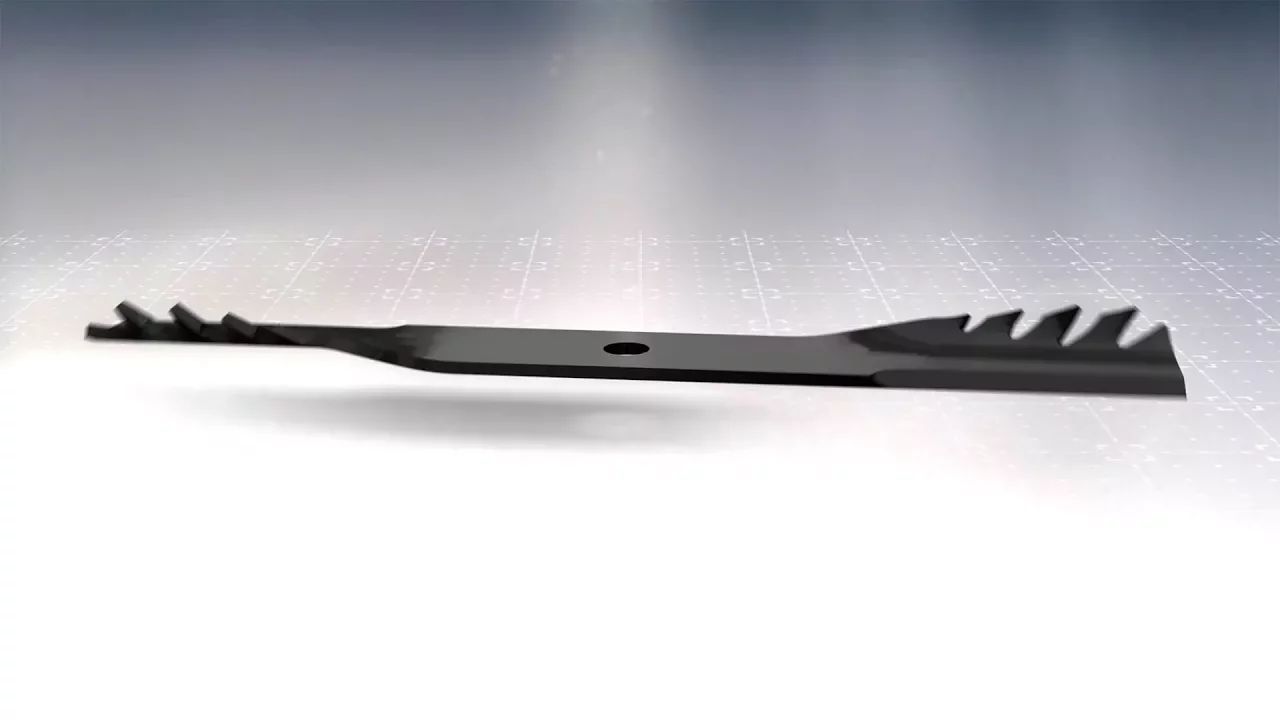
The heavy duty mower blades are fitted into a machine that cuts tough grasses and foliage. The blades of the mower are stronger than those in standard machines and can bear more weight while mowing tough plants. They have better chopping ability than standard blades. Because they are constantly under impact, the choice of blade directly affects cutting performance and working life. Selecting the right blade is not only about size or price. It also depends on how and where the machine will be used. In many field applications, equipment from JYF Machinery is paired with different blade types depending on ground conditions and workload needs.
Material Strength
The most important thing is the blade’s composition. A stronger material can withstand impact much more than one that isn’t strong. The overall hardness and toughness of the metal also affect long-term cutting performance in rough working environments. Soft metals wear down quickly when used on thick vegetation or hard ground. Stronger steel holds its edge longer and reduces the need for frequent replacement.
Heat Treatment Quality
Heat treatment affects blade behavior. Heating influences stiffness and hardness. Overly stiff blades become brittle; too soft blades wear out. A balance in treatment is needed for stability during prolonged cutting periods.
Blade Thickness
Thickness plays a direct role in durability. It is better to use thick blades when handling hard plants because they can withstand greater stress. But thicker blades wouldn’t be easy to use, since the machine would need more force. It should be noted that a proper balance needs to be maintained between these two areas.
Cutting Edge Shape
A blade that has been constructed differently cuts vegetation in its own manner. A blade with a sharp cutting edge works best for cutting grass, while the angled one handles brushing and tough materials best. It is thus necessary to choose a blade according to the vegetation on the terrain.
Type of Vegetation
Different environments require different blade performance. Some terrains will have light grass to cut while others might require cutting of tough vegetation. Blade selection should take into account the type of vegetation found in the environment.
Ground Conditions
Soil type also affects blade choice. Soft ground creates less resistance, while rocky or compact soil increases wear on the cutting edge. In rough terrain, blades must handle both vegetation and hidden objects in the soil. This makes durability more important than cutting speed in such conditions.
Machine Compatibility
Blades that do not work with each particular lawnmower do exist. Each device has a unique mount that requires a compatible blade shape. Improper fit will result in vibrations and uneven cutting.
Weight Balance
Balanced blades make it easier to operate the lawnmower without problems. Unbalanced blades may cause vibrations that will increase wear of both parts. Balanced design helps maintain steady cutting over longer periods.
Resistance to Wear
Wear resistance is the factor that dictates the duration the blade will remain functional. Tough objects should obviously be able to withstand more wear before they need replacing. In numerous agricultural applications, systems manufactured by JYF Machinery are preferred due to their reliable wear resistance.
Impact Load Handling
During operation, blades often hit hard objects such as rocks or roots. These impacts can quickly damage weak blades. Strong blades are designed to absorb impact without breaking. This reduces sudden failures during work and helps maintain steady operation.
Rotor Speed Compatibility
Every mower operates at a specific rotor speed. The blade should be able to withstand the stress of working under such conditions. In case the blade is incompatible with such speed, then it can get worn off unevenly or even become unstable.
Maintenance Requirements
Some blades need more maintenance than others do. Always check if the blade is worn out. Testing it can help you know if it’s damaged and help it last longer.
Replacement Frequency
All blades eventually wear out. The goal is to choose a blade that provides longer service life under real working conditions. In professional settings, equipment from JYF Machinery is often used with blades chosen for longer replacement intervals to reduce downtime during field work.
Conclusion
For selecting good blades for the heavy-duty mower, there is a need to consider various factors, including the material, design, suitability, and working environment. The consideration of each of these will improve the performance of the blade in the field. With a good combination of blades, operational stability, and performance efficiency, these goals are achieved. Most land-clearing projects using machines from JYF Machinery depend on high-quality blades.